.png)
Activation Groups are the core working units through which CDR2030 organizes focused collaboration and advances implementation.
Each group brings together actors working on a distinct part of the acceleration challenge, with a defined area of focus, a dedicated convener, and a role in helping generate Actions to Accelerate CDR in support of the 2030 Implementation Target.
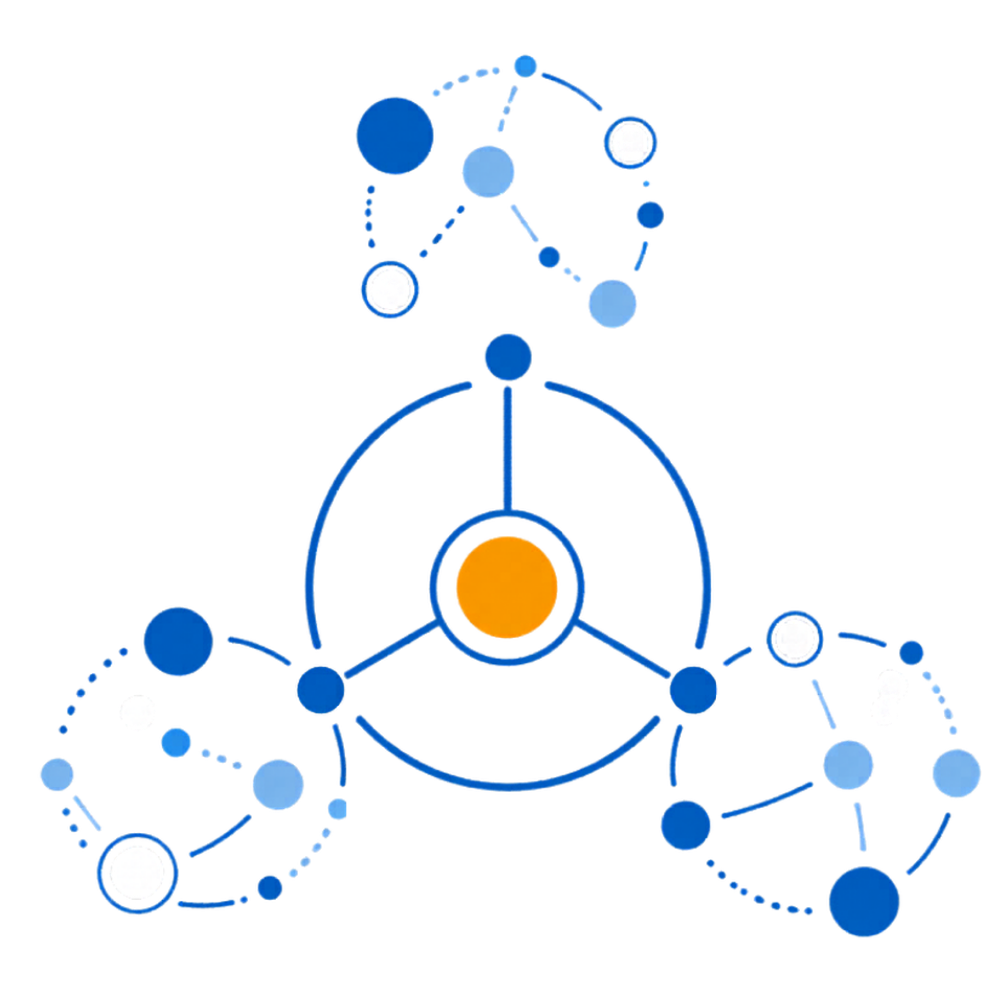
CDR2030 organizes its work through three Activation Groups: Demand Mobilization, Policy Activation, and Industrial Integration. Each group represents a critical area where coordinated action is needed to make carbon dioxide removal scalable by 2030. These groups are not silos.
They are highly connected and mutually reinforcing: demand depends on policy, policy depends on practical implementation, and industrial integration depends on both market and regulatory signals.
CDR2030 members participate by developing or supporting Actions to Accelerate CDR within one or more Activation Groups, helping turn shared priorities into concrete progress toward the 2030 Implementation Target.
This Activation Group focuses on strengthening the demand-side conditions needed for carbon removal to scale. It brings together companies, public buyers, intermediaries, and other actors who can help create credible demand signals, build procurement pathways, and connect carbon removal to real economy decision-making and value chains.
Over the next five years, carbon removal will not scale fast enough through supply-side innovation alone. It also requires stronger demand signals: from companies, public buyers, compliance systems, and other institutions that can help create durable markets for high-quality CDR.
Demand mobilization is needed to turn climate necessity into real purchasing, procurement, and policy pull — helping accelerate early deployment, strengthen market confidence, and create the conditions for larger-scale growth toward the 2030 Implementation Target.
Mobilizing private-sector buyers to support carbon removal through net-zero strategies, advance market commitments, buyer coalitions, and other forms of early voluntary demand.
Embedding carbon removal into real procurement systems and decision-making processes, so buyers can act through practical, repeatable approaches rather than one-off transactions.
Advancing demand created through public procurement, compliance frameworks, and international mechanisms such as Article 6, helping move CDR from discretionary purchasing toward more durable market pull.
Strengthening the trust conditions that make demand possible, including standards, accounting, durability rules, and monitoring, reporting, and verification systems that support credible market growth.


This Activation Group focuses on strengthening the policy and governance conditions needed for carbon removal to scale with integrity. It brings together actors working across the full policy landscape — from multilateral processes and national governments to regulators, sub-national authorities, and municipalities — to help develop the frameworks, institutions, and public mechanisms that can support implementation over time.
Carbon removal will not scale through voluntary action and private initiative alone. It also requires stronger public enabling conditions: policy frameworks, regulatory clarity, public procurement, compliance pathways, and institutional support that can help move CDR from early experimentation toward broader implementation. Policy Activation is needed to help shape those conditions across every level of governance, so that carbon removal can be integrated into real public decision-making and advanced toward the 2030 Implementation Target.
Advancing policy tools that help create durable demand for high-quality CDR, including public procurement, prizes, subsidies, advance market commitments, and other demand-side mechanisms.
Strengthening the rules and institutions that help CDR scale credibly, including MRV, durability, accounting, liability, safeguards, and quality standards.
Supporting the public measures needed to help projects get built and scale, including capital support, infrastructure, permitting, demonstration funding, and other deployment-enabling investments.
Exploring how CDR can be integrated into compliance systems, regulatory regimes, and market frameworks over time, including Article 6, ETS-related pathways, and other long-term demand mechanisms.

This Activation Group focuses on integrating carbon removal into real-economy industrial systems. It brings together companies, solution developers, investors, and other actors working to embed CDR into existing infrastructure, material flows, and operational processes — especially in sectors that handle large volumes of rocks, minerals, water, air, biomass, carbon, or industrial waste.
Over the next five years, carbon removal will not reach meaningful scale as a standalone industry alone. Existing industries are needed to provide the feedstocks, infrastructure, engineering expertise, project capacity, and commercial pathways that can help accelerate deployment. Industrial integration is needed because many of the most promising opportunities for CDR scale depend on embedding removal into operating sectors — turning waste into value, sharing infrastructure, creating new revenue streams, and linking carbon removal to real production systems.
Supporting the multiple roles industry can play in scaling CDR — as infrastructure provider, strategic investor, project partner, solution developer, and market-shaper.
Embedding removed carbon into durable products and industrial materials, especially in construction and the built environment, where carbon-storing products can create both climate value and commercial opportunity.
Integrating CDR with existing industrial sites and systems through shared infrastructure, co-location, transport, storage, energy flows, and other operational synergies that reduce cost and speed deployment.
Using industrial wastes, residues, and byproducts as inputs for carbon removal, including biomass wastes, mineral tailings, slags, demolition waste, brines, and waste heat.